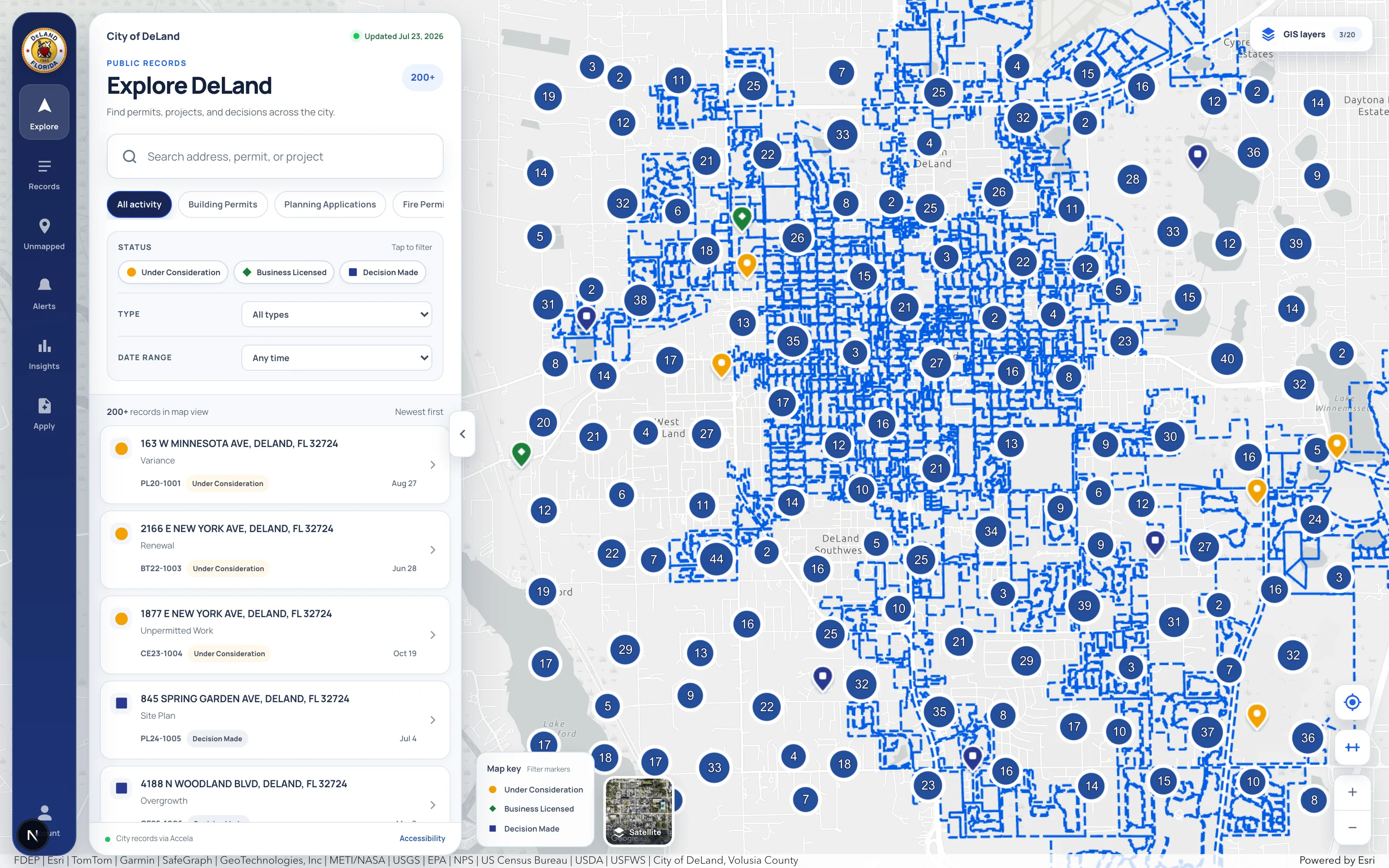
Residents find the record. Then understand it.
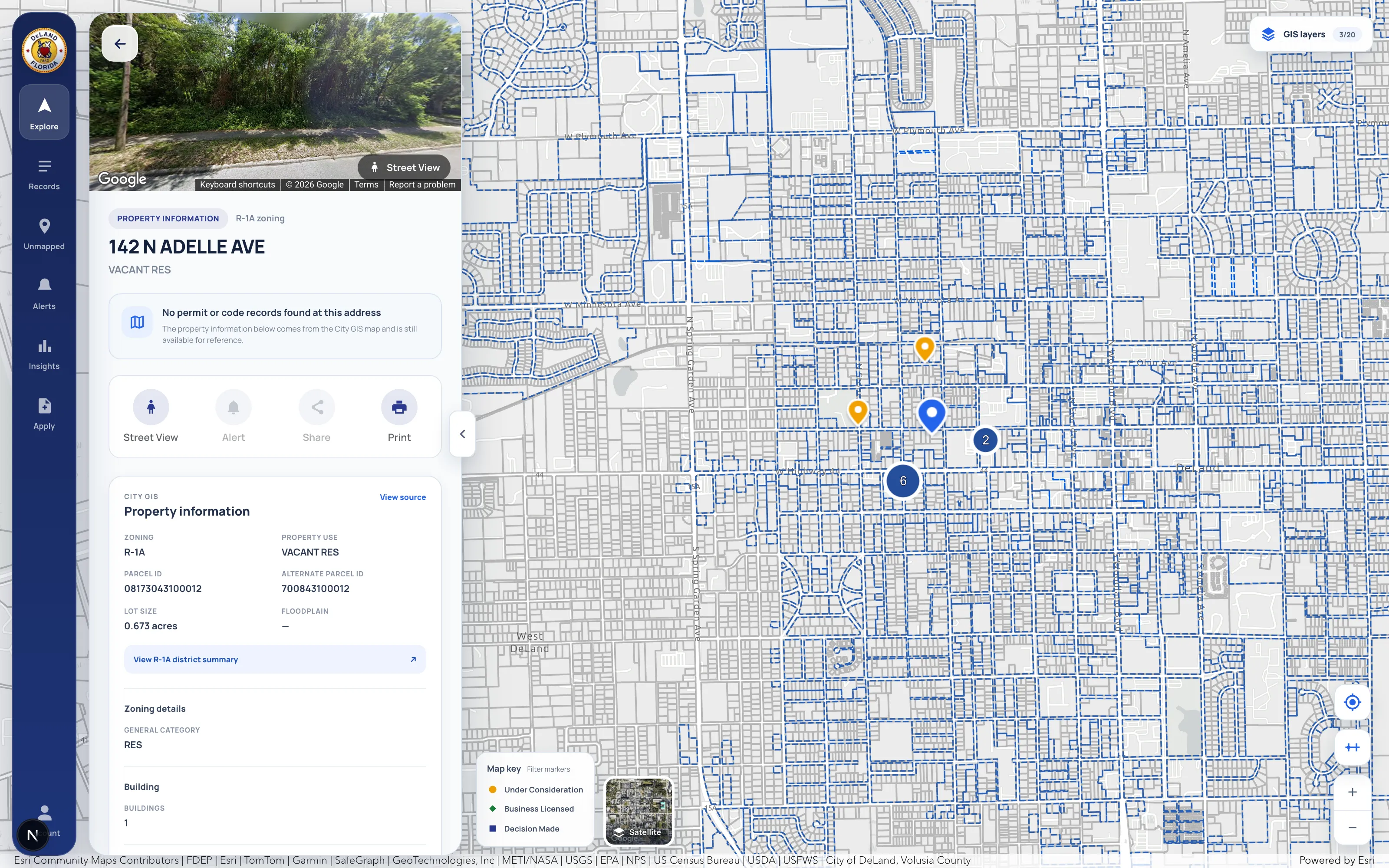
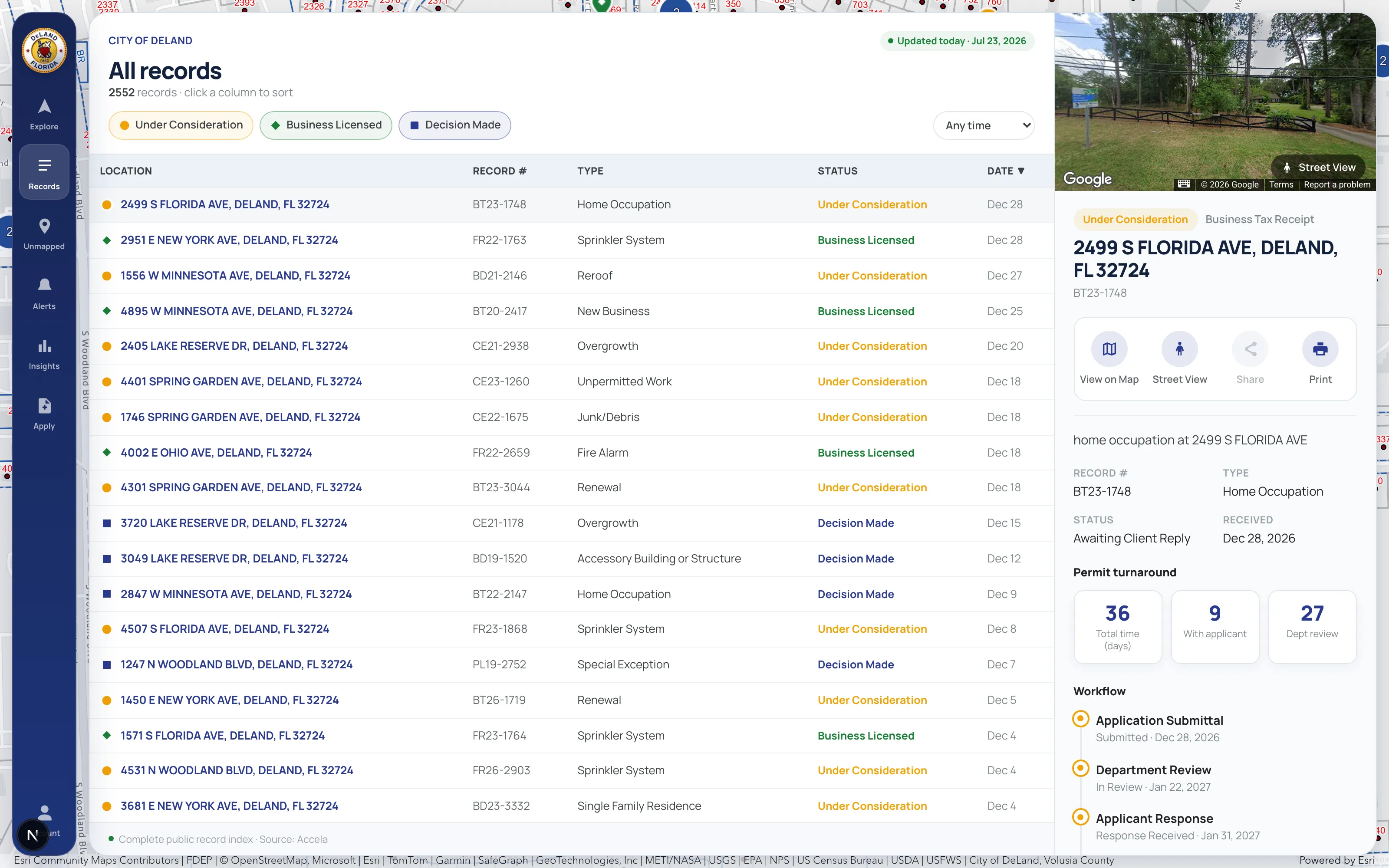
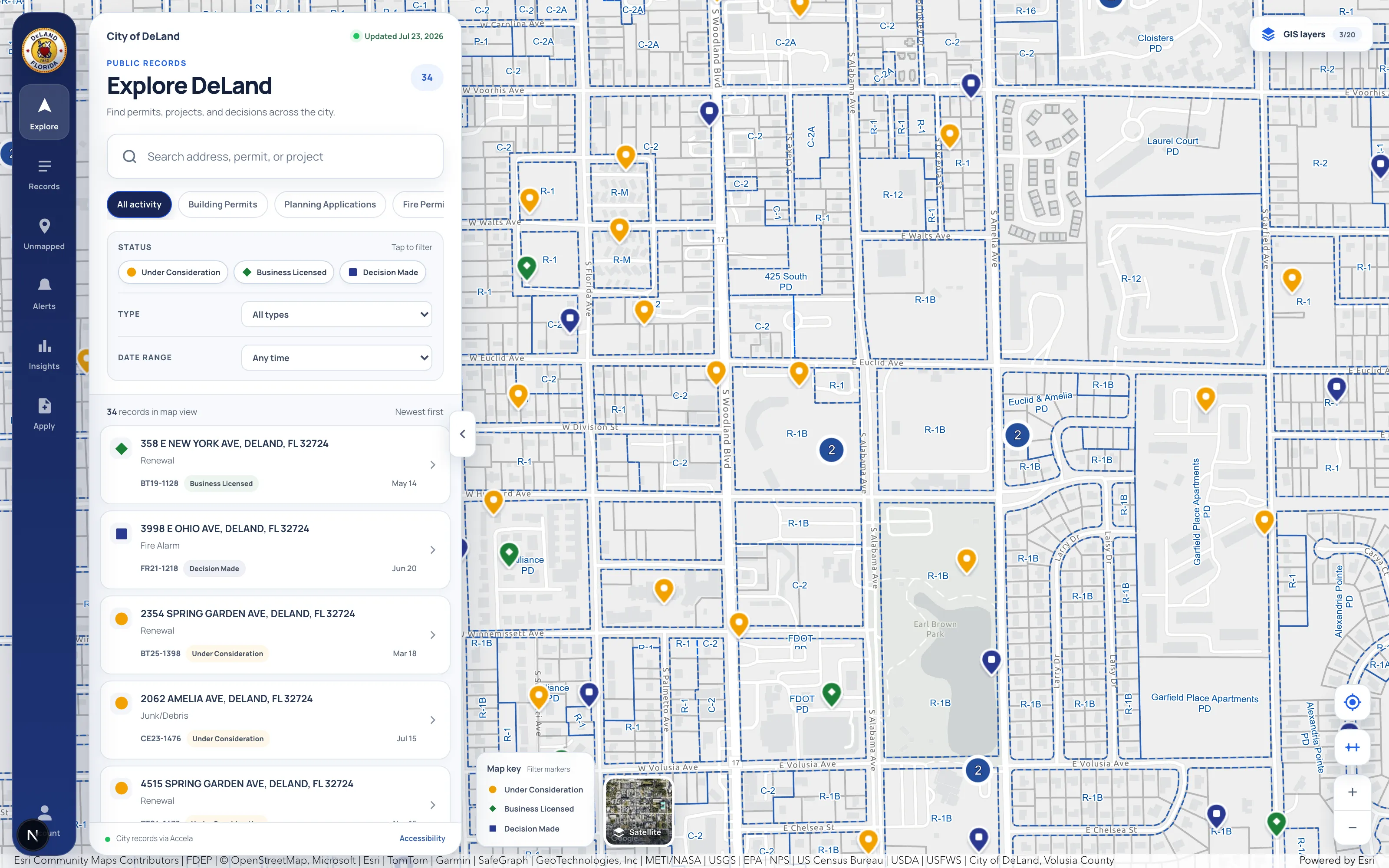
Search by address or record number, move between an interactive map and an equal list, follow the workflow, and get a plain-language explanation—without creating an account.
Public records, made public
Turn permits, planning, code, fire, and licensing records into one fast, accessible civic experience—without replacing the systems your team already trusts.
The standard is set
The DOJ’s updated Title II rule sets WCAG 2.1 Level A and AA requirements, with compliance dates beginning April 26, 2027. Aedilio gives every map an equivalent keyboard- and screen-reader-friendly list from day one. Read the DOJ fact sheet
The public experience is the product
Aedilio turns the same operational data your teams already manage into useful, plain-language answers for residents, applicants, leaders, and staff.
Search by address or record number, move between an interactive map and an equal list, follow the workflow, and get a plain-language explanation—without creating an account.
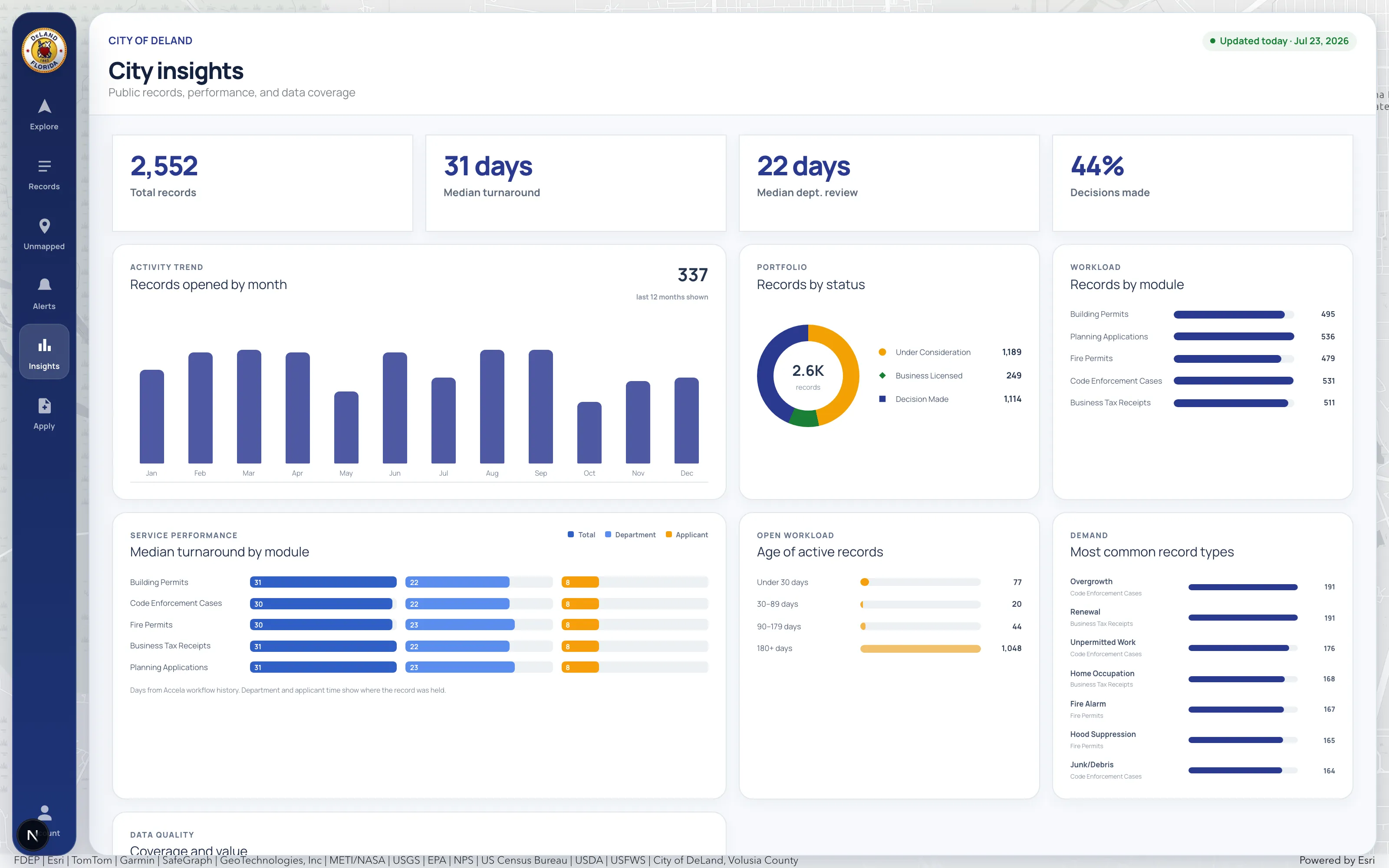
Public scorecards make volume, status, and turnaround visible. Staff views surface sync health, quality issues, and bottlenecks before they become meeting-room surprises.
Your canonical records, APIs, and configuration remain portable. Provider adapters isolate source systems; exact tenant boundaries, audit trails, and roles are built into the platform.
One connected platform
Aedilio sits above the tools you already use and publishes only what the public is meant to see.
Your systems
Every audience
Public fields stay browsable. Accounts unlock alerts and convenience—not transparency.
AI features retrieve live records and cite them. Deterministic search stays available.
Branding, modules, policies, domains, and access remain isolated per organization.
Freshness, sync results, health, and change history are visible instead of assumed.
Built to be verified
Built around the people doing the work
The public sees one clear front door. Every internal stakeholder gets the outcome they care about.
See permit activity, service levels, and data freshness at a glance. Share a public link that shows exactly what you see.
Stable adapters isolate vendors from your public experience. Configuration, secrets, access, and audit history stay governable.
Residents can follow the status, workflow, contact, and context themselves—while staff keep working in the system of record they already know.
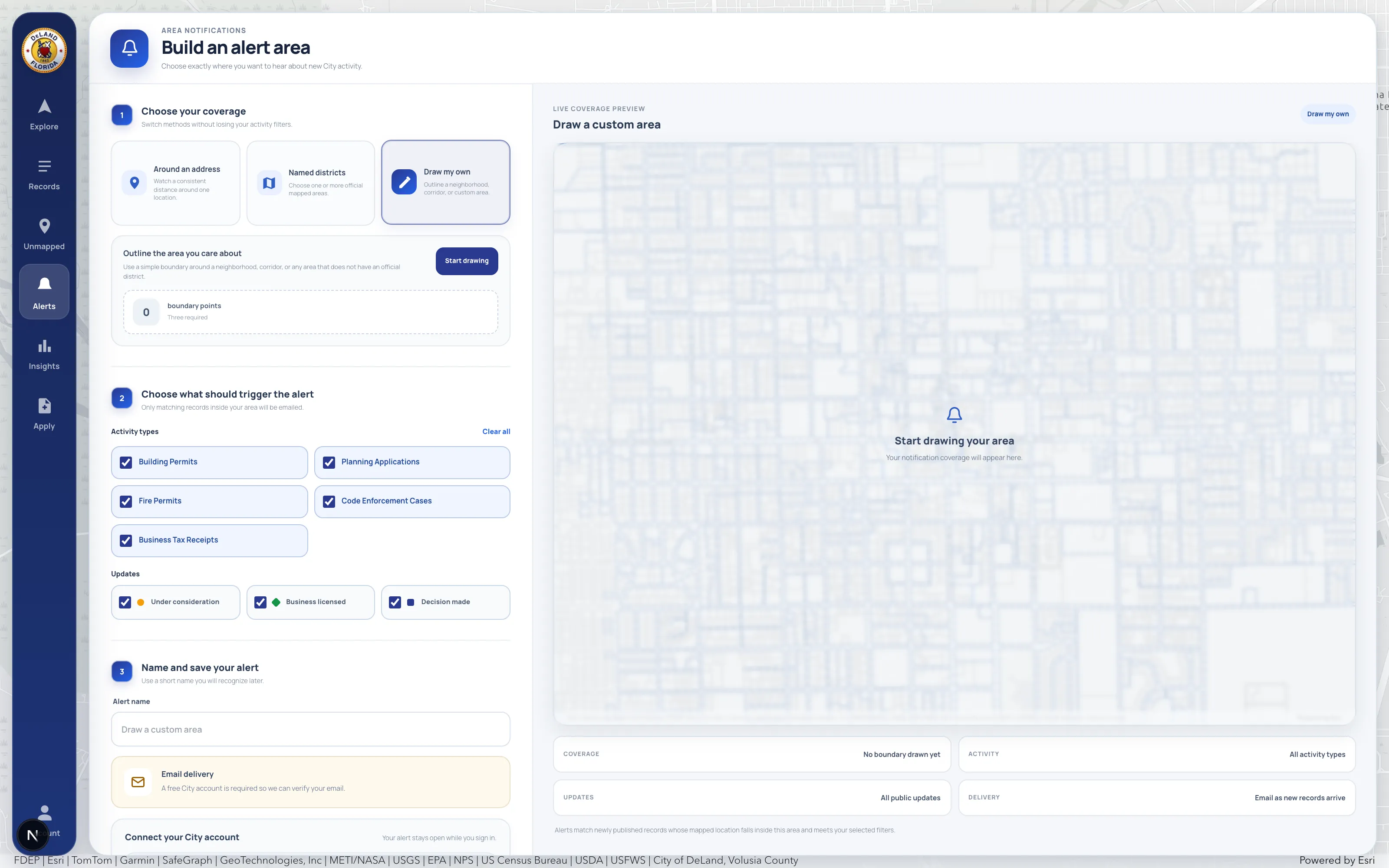
Search the entire public dataset, move between map and list, subscribe to an area, and see when the data was last refreshed.
Accessibility that can be demonstrated
Aedilio treats WCAG 2.1 AA as an engineering constraint: semantic server-rendered pages, an equal list for the map, keyboard-complete controls, tested contrast, live status announcements, and automated accessibility gates in delivery.
No essential record is trapped inside a visual map.
Author-time rules and axe checks catch regressions before release.
Manual keyboard and assistive-technology testing remains part of launch.
A rollout your team can see
We start with your real source data, publish behind a controlled review gate, and launch only after content, policy, and accessibility checks are complete.
Validate source access, map raw statuses, and run a sample sync without touching the system of record.
Data contractSet branding, public fields, modules, contacts, map behavior, roles, and launch domains.
Tenant workspaceReview real records, validate redaction, test assistive technology, and reconcile sync results.
Acceptance evidenceMove to your domain, monitor freshness and health, then add alerts, AI, and open-data features.
Governed releasesA different ownership model
A public portal can be more than a hosted map. It can become civic infrastructure.
| Capability | Typical hosted portal | A Aedilio |
|---|---|---|
| Public data access | Useful features may sit behind an account | Public by defaultProtect only what policy requires |
| Data ownership | Vendor-managed product and pipeline | Your canonical storePortable records and open exports |
| Map accessibility | Alternative experience varies | Equal map and listDesigned and tested together |
| Artificial intelligence | Generic or unavailable | Grounded and citedProvider-agnostic, with a non-AI path |
| Growth | One portal, one contract | Multi-tenant foundationShare infrastructure without sharing data |
Pricing without theater
We price around the complexity of the rollout—not the number of staff who need to do their jobs. Your proposal separates implementation from ongoing operations, and every assumption is visible.
Recommended starting point
Prove the model with one high-value public workflow and a controlled path to expand.
Straight answers
Have a more specific question? Include it in your launch request and we’ll answer it directly.
No. Accela remains the system of record. Aedilio synchronizes, normalizes, protects, and publishes selected data through a public experience and operational views.
Yes. A focused launch is often the safest path. Modules, public-field policies, contacts, and coverage dates are configured independently, so the platform can expand without a rebuild.
No product alone can guarantee legal compliance. Aedilio is engineered around WCAG 2.1 AA patterns and automated gates, then paired with content, configuration, manual testing, and launch evidence.
The model never invents public records. It translates questions into validated searches or explains retrieved records, with links back to the underlying record. The deterministic search and raw data remain available.
Yes. Each tenant has isolated branding, modules, field policies, contacts, locales, map settings, and verified domains. A shared platform does not mean a generic public experience.
Start with your real constraints
Tell us where your data lives and what residents need to understand. We’ll come back with the right discovery questions—not a generic deck.